
 EN
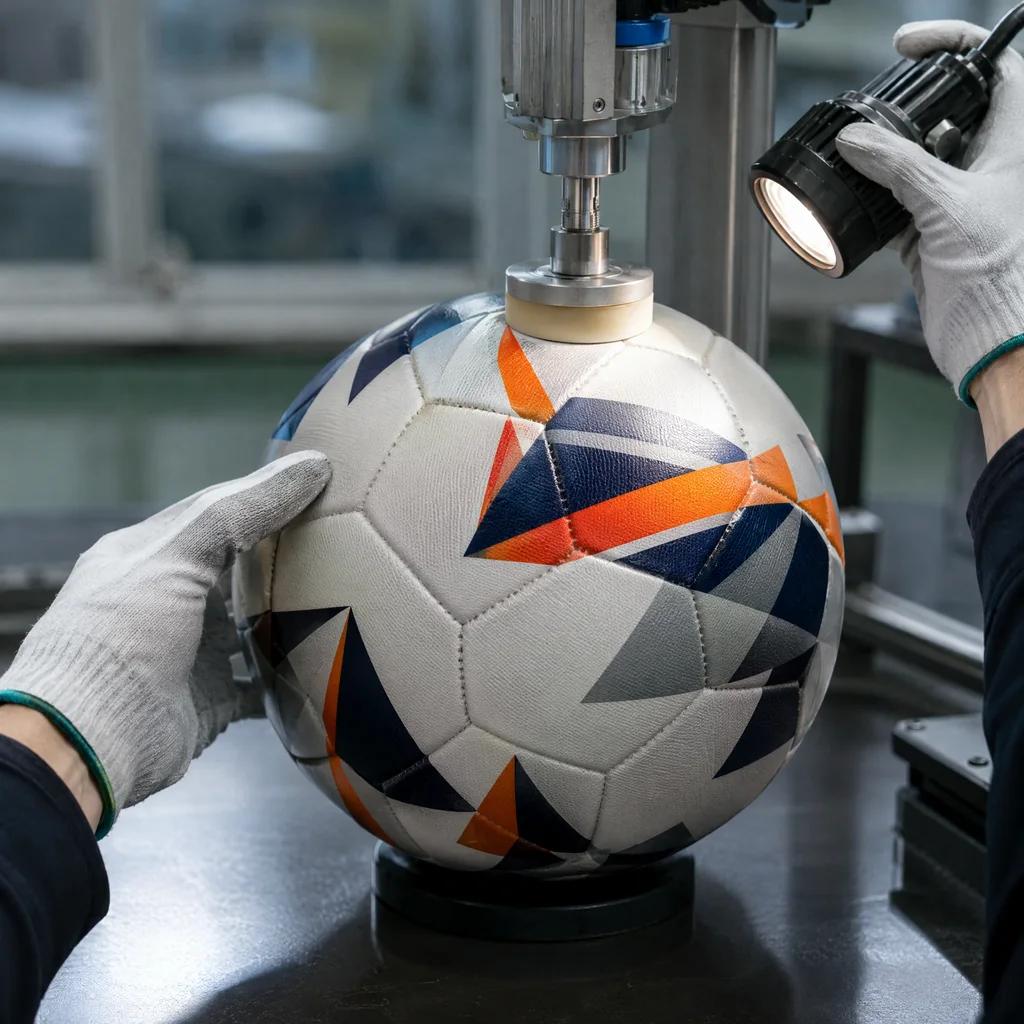
Soccer Ball Printing Methods: Comparing Screen Print, Heat Transfer, and Embossing
Choosing soccer ball printing methods is a production decision as much as a branding decision. The selected process must follow the cover material, panel curvature, order quantity, artwork, budget, and expected use. Screen print, heat transfer, and embossing can all produce attractive results, but they behave differently when panels are stitched, inflated, cleaned, and exposed to abrasion. A clear comparison helps B2B buyers avoid approving a logo that looks good on a flat proof but fails on the finished ball.
Screen printing for practical volume programs
Screen printing applies ink through a prepared mesh onto a panel or assembled surface. It can be efficient for repeat graphics, simple logos, and strong solid colors. When the ink and curing process are well matched to a synthetic cover, screen printing can provide good opacity and economical unit cost. It is often suitable for training balls, promotional programs, and orders that use limited colors.
The main variables are mesh selection, ink viscosity, registration, pressure, drying, and the texture of the receiving surface. A heavily textured panel may interrupt the ink film and produce small gaps. Buyers should inspect edges, fine lettering, and color density under normal and close lighting. Ask whether the factory prints before stitching or after assembly, because the choice affects registration and access to curved areas.
Heat transfer for detailed artwork
Heat transfer uses a printed film or transfer layer bonded to the cover with controlled temperature and pressure. It can reproduce gradients, small details, and multi-color artwork more easily than some direct processes. For private-label products, heat transfer is useful when the buyer needs a precise logo or a short run with several design versions.
Heat transfer quality depends on film construction, adhesive activation, press temperature, dwell time, pressure, and the flexibility of the substrate. Too much heat may change the cover texture or cause an unwanted gloss halo. Too little heat can lead to lifting at the edges. The factory should test the transfer on the actual production material, including any foam backing, before approving a bulk order.
Embossing for integrated texture
Embossing presses a raised or recessed pattern into a panel or laminated surface. It can create a premium tactile effect and make a mark feel integrated with the cover. Embossing is also useful for subtle brand elements, texture zones, or construction references that do not require a separate ink layer.
The artwork must be simplified enough to survive the forming process. Fine lines may close up, while deep embossing can thin the material or create stress points. Confirm the embossing depth, edge radius, panel position, and compatibility with the ball’s bending and stitching sequence. A molded or embossed sample should be evaluated after inflation and use simulation, not just while it is flat.
How to compare soccer ball printing methods
Build a comparison around the buyer’s real priorities. For a large school order with one-color artwork, screen print may offer speed and value. For a premium retail program with complex graphics, heat transfer may provide better detail. For a restrained luxury look, embossing can create differentiation without adding a bright graphic. The best soccer ball printing methods are the ones that meet the visual brief while surviving the product’s environment.
Review setup cost, minimum order quantity, color matching, lead time, decoration location, and re-order repeatability. Also ask whether artwork changes require a new screen, die, film, or approval cycle. These details affect total program cost more than the decoration price shown on a unit quotation.
Durability and wash testing
Every decorated sample should be tested as a finished ball. Inflate it to the approved pressure, perform repeated impacts, wipe it with the intended cleaning method, and inspect the print after drying. Check for cracking, peeling, color transfer, bleeding, loss of gloss, and edge lift. For outdoor use, include moisture and abrasion exposure. A printed panel can pass a dry rub test but fail when stretched around a seam.
Use a signed color standard and a tolerance for registration. Record whether the approved sample was printed before or after stitching. If a factory changes ink, film, surface coating, or curing equipment, request a new strike-off or sample. Consistency is especially important when a buyer combines several cartons or reorders the same design months later.
Artwork preparation and inspection
Supply vector artwork with clear color references, minimum line weights, safe areas, and the required logo orientation. Avoid placing critical text directly over seams, sharp panel corners, or valve openings. The factory should return a digital proof and a physical decorated sample. Inspect spelling, scale, color, registration, texture, and alignment before giving production approval.
Conclusion
Screen print, heat transfer, and embossing each have a place in professional soccer ball branding. Compare soccer ball printing methods by material compatibility, artwork complexity, durability, setup cost, and repeat-order control. When testing is performed on the finished ball and the decoration process is documented, buyers can protect both brand appearance and long-term product performance.