
 EN
Soccer Ball Quality Control: A Factory Checklist
Soccer ball quality control starts before the first panel is cut. A reliable program links the product brief, approved sample, material records, production controls, testing, and final inspection. For B2B buyers, this approach helps prevent a common problem: a ball that looks acceptable in a catalog but does not perform consistently across the order.
Factories may use different equipment and internal procedures, so the buyer’s soccer ball quality control checklist should focus on measurable requirements and evidence. The goal is to make sure every approved unit meets the intended specification and that deviations are discovered early. A clear soccer ball quality control plan gives the purchasing team a common reference and creates a repeatable soccer ball quality control method.
1. Confirm the product specification
Begin with a written specification covering size, intended surface, construction method, cover material, bladder, lining, valve, colors, artwork, and packaging. Include acceptable physical tolerances and cosmetic standards. In soccer ball quality control, terms such as “premium,” “professional feel,” or “durable” are useful for marketing, but not enough for factory control. A soccer ball quality control plan needs observable acceptance points.
The specification should state soccer ball quality control test conditions. This soccer ball quality control section defines the inspection basis. Rebound, inflation retention, circumference, weight, and roundness are soccer ball quality control measures affected by temperature, pressure, and conditioning time. If buyer and factory methods differ, results may differ. Agree on method, sample quantity, and acceptance rule before production.
2. Audit incoming materials
Incoming inspection protects the production line from inconsistent components. For soccer ball quality control, check synthetic leather rolls for color, thickness, surface texture, coating uniformity, and visible damage. This soccer ball quality control review should be linked to the material lot. Review foam and fabric backing for weight, bonding, and delamination. Thread, adhesive, ink, valves, and bladders should also be traceable to the purchase specification.
Color approval is a soccer ball quality control point for branded programs. Compare production materials with an approved physical standard under controlled lighting. Digital color files do not fully represent a textured cover or finished curved ball. Record the soccer ball quality control check in the batch file.
Material inspection records should identify the lot used in each production batch. This traceability is a core part of soccer ball quality control because it helps the supplier investigate a complaint without treating the entire product line as one undifferentiated quantity.
3. Control cutting and panel preparation
Panel cutting influences symmetry, seam alignment, and final roundness. In soccer ball quality control, this soccer ball quality control review should inspect cut edges for clean profiles and confirm that the cutting die matches the approved design. A small variation in panel shape can create uneven tension after stitching or bonding.
For printed panels, check artwork position, registration, color coverage, and scuffing as part of soccer ball quality control. Keep the result with the production record. For textured or laminated materials, verify grain direction and backing. Separate rejected panels before assembly. These are practical soccer ball quality control actions.
4. Monitor assembly and construction
During stitching, soccer ball quality control should review seam allowance, stitch density, thread tension, thread security, and panel alignment. Loose stitches, skipped stitches, exposed thread ends, and irregular seam depth are warning signs. Operators should use a defined sequence and suitable fixtures so the bladder and lining are not distorted while the ball is closed. This soccer ball quality control step should be recorded by batch.
During thermal bonding, soccer ball quality control should monitor panel cleaning, adhesive or film placement, heating conditions, pressure, and cooling. The finished seam should be continuous, without lifting, bubbles, wrinkles, or visible contamination. This soccer ball quality control check should be repeated when the cover material, artwork, or order color changes.
Check bladder installation before the final closing operation. This soccer ball quality control point matters because the valve should be centered and secure, and the bladder should not twist inside the shell. A poorly positioned valve can affect appearance and may make inflation difficult for the user.
5. Inspect shape and physical characteristics
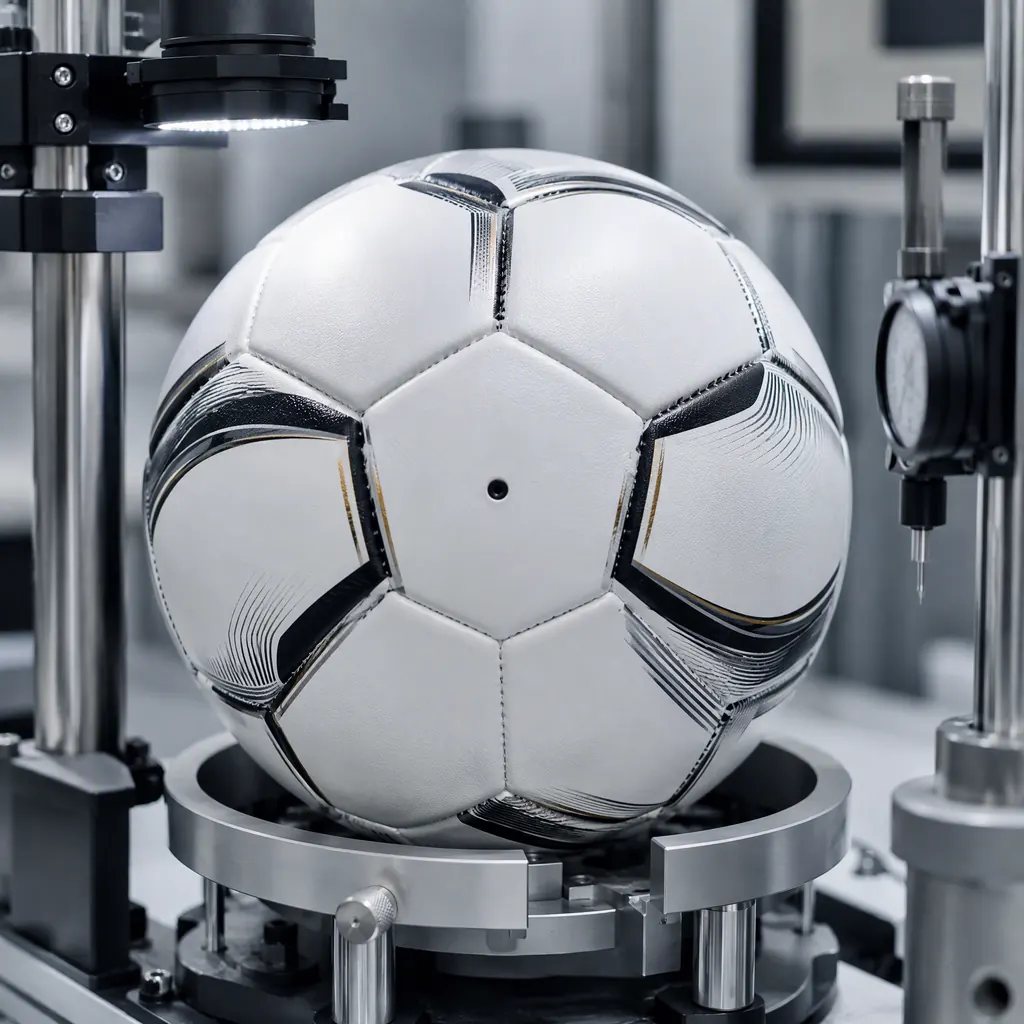
Roundness and circumference are soccer ball quality control checks. Measure at multiple orientations and keep the results in the soccer ball quality control record. Examine the ball on a suitable fixture to identify flat spots, bulges, panel steps, or uneven tension.
Weight should be checked using a calibrated scale, with the ball conditioned in the agreed state. As part of soccer ball quality control, this soccer ball quality control measurement should compare the result with the approved tolerance, not with a vague expectation. Also examine the cover for excessive wrinkles, inconsistent gloss, scratches, contamination, and defects that become visible after inflation.
Inflate samples using the agreed pressure and allow adequate settling time before evaluating shape and feel. This soccer ball quality control step is particularly important when comparing different bladder materials or construction methods.
6. Perform performance checks
Performance testing is another part of soccer ball quality control. This soccer ball quality control stage should reflect the intended use. Rebound and feel may be reviewed on an appropriate surface, while water-resistance checks are relevant to outdoor models. A training ball for hard ground may need abrasion evaluation, whereas a premium match-style ball may require closer attention to flight stability and touch.
Inflation retention is a useful indicator of bladder, valve, and seam integrity in soccer ball quality control. Repeated inflation and deflation can reveal problems that are not visible in a static inspection. For bonded products, use conditioning or repeated-use checks to look for seam opening. For stitched products, inspect thread and seam movement after handling, then add the findings to the soccer ball quality control record.
The factory should record equipment settings, environmental conditions, sample identification, and test results as part of soccer ball quality control. A result without a method or traceable sample is difficult to use in a corrective-action discussion.
7. Review branding and packaging
Brand artwork is part of soccer ball quality control, not an afterthought. Verify logo scale, position, spelling, color, orientation, and print adhesion. Inspect panels near seams because artwork can shift or distort during assembly. Confirm that country-of-origin markings, care instructions, barcodes, and carton labels match the purchase order.
Packaging should protect shape and surface finish during transport. Include packaging in the soccer ball quality control review. This soccer ball quality control step should check individual bags, cartons, dividers, and pallets for the product and shipping route. If balls are shipped flat, confirm that packaging will not create permanent creasing. A packing sample can identify issues before mass production.
8. Conduct final inspection
A final inspection should combine documentation review, sampling, visual inspection, measurement, and functional checks. The sampling plan should be agreed before the inspection begins. It should distinguish critical defects, major defects, and minor cosmetic issues so decisions are consistent. This final soccer ball quality control review should reference the approved specification.
Inspectors should compare production units with the sealed reference sample and the latest approved artwork. In a soccer ball quality control report, record defect location and type rather than using general comments such as “quality is poor.” If a lot is not accepted, request a documented rework or sorting plan and define how the corrected units will be rechecked.
9. Maintain corrective action and traceability
A good quality system learns from defects. When a problem appears, the supplier should identify the likely cause, contain affected units, correct the process, and verify the result. Buyers should retain inspection reports, material records, sample approvals, test data, and shipment references. This evidence supports future repeat orders and makes supplier discussions more objective.
It is also useful to review quality trends by style, factory line, material lot, and production period. Repeated seam issues, color drift, valve problems, or packing damage may indicate a process weakness even when individual shipments pass a basic soccer ball quality control inspection.
Supplier meetings should review accepted and rejected samples as part of soccer ball quality control. Discuss material variation, operator handling, equipment setup, artwork control, or packing. Corrective action is stronger when it changes the process and includes verification. This protects later orders and supports supplier development.
Conclusion
Soccer ball quality control works best as a documented chain of soccer ball quality control checks: clear specification, controlled materials, disciplined assembly, physical measurement, use-relevant testing, careful packaging, and documented final inspection. B2B buyers do not need to inspect every production decision themselves, but they do need evidence that the factory can repeat the approved result. A practical checklist turns quality from a promise into a process that can be reviewed and improved.