
 EN
Choosing Basketball Stands for Indoor and Outdoor Courts
Choosing basketball stands for a school, club, training center, stadium, or municipal court requires more than comparing the backboard and rim. The complete system must suit the court surface, installation conditions, playing intensity, storage plan, safety requirements, and maintenance environment. Indoor courts often prioritize fixed alignment, clean appearance, and integration with a building structure. Outdoor courts usually need weather resistance, stable anchoring, impact protection, and a practical way to manage movement or long-term exposure. For B2B buyers, the right decision begins by matching the stand design to the court’s real operating conditions.
A supplier quotation for basketball stands should identify the stand type, steel or aluminum construction, base or anchoring method, backboard, rim, padding, adjustment range, packaging, and installation instructions. A product described simply as a “basketball stand” may refer to a portable unit, an in-ground system, a wall-mounted frame, or a ceiling-supported structure. Clear specifications make basketball stands samples and factory quotations comparable. This distinction matters when a buyer requests several basketball stands for different courts.
Match the stand to the court environment
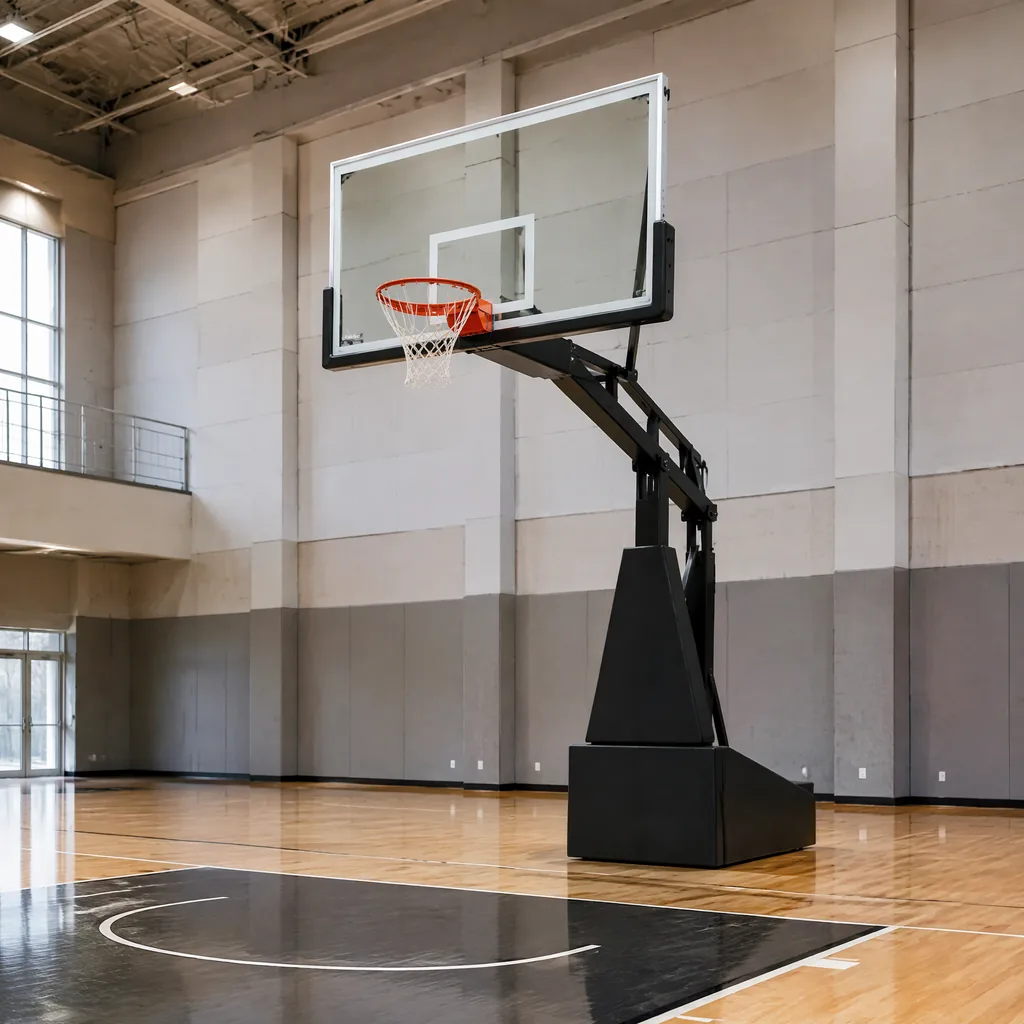
Indoor courts provide protection from rain and direct sunlight, but basketball stands still need to handle repeated impact, vibration, cleaning, and organized storage. A fixed or ceiling-supported design can be suitable when the court has a stable layout and the equipment will remain in position. Buyers should confirm the building structure, available clearance, installation height, floor condition, and access for maintenance before selecting the frame. In a multi-use hall, folding or retractable basketball stands may be more practical than a permanent projection into the playing area.
Outdoor courts create a different set of requirements for basketball stands. Rain, humidity, ultraviolet exposure, dust, temperature changes, and uneven ground can accelerate corrosion or loosen connections. The buyer should specify the intended climate, drainage conditions, wind exposure, and anchoring method. A portable base may work for controlled recreational use, while a permanent in-ground system may be preferable for public or high-frequency courts. The correct choice depends on the location and risk profile, not on portability alone.
Compare fixed, portable, and retractable designs
Fixed in-ground basketball stands usually provide strong alignment and a stable playing position. They can suit schools, clubs, and outdoor facilities that have a dedicated court and do not need frequent relocation. The purchase plan should include foundation dimensions, anchor bolts, concrete requirements, installation sequence, and future access to critical connections. A fixed structure may have a higher installation commitment, but it can reduce movement-related adjustments during daily use.
Portable basketball stands offer flexibility for training halls, temporary courts, events, and facilities that share floor space. Buyers should evaluate base dimensions, ballast or water capacity, wheels, locking mechanisms, tipping resistance, and the safe procedure for moving the unit. A portable system is not automatically safer because it can be relocated. The frame must remain stable during ordinary play, and staff need clear storage and movement instructions. Retractable or wall-mounted options can save floor space but require a qualified structure and a documented installation plan.
Review structure, materials, and finish
The frame of basketball stands should be assessed as a load-bearing system rather than by tube appearance alone. Check steel grade or material specification, tube dimensions, weld quality, fasteners, joints, reinforcement plates, base design, and connection tolerances. Ask for drawings or a component list that shows how the backboard, rim, support arm, and base transfer load. Sharp edges, incomplete welds, exposed threads, and poorly fitted covers can create avoidable safety or service problems.
Outdoor basketball stands need a finish suited to the climate. Powder coating, galvanizing, paint systems, stainless fasteners, and sealed joints may be combined according to the product design. The supplier should explain surface preparation, coating thickness, corrosion protection, and touch-up guidance. Indoor equipment still needs a durable finish because sweat, cleaning chemicals, and repeated contact can damage weak surfaces. Request finish samples and inspect hidden edges, weld zones, bolt holes, and drainage points instead of judging only the front-facing color.
Verify safety and playing alignment
Safety checks should cover the entire stand during realistic use. Confirm that the base, frame, backboard, rim, padding, and anchors remain stable under repeated contact. Inspect the area around the support arm for pinch points and check that protective padding is secure, correctly positioned, and resistant to tearing. For adjustable products, verify that the locking system holds the selected height and cannot release unexpectedly during normal operation.
Alignment is also important to the playing experience. Check backboard position, rim level, verticality, projection, and movement after installation. Portable units should be tested on the actual court surface, including transitions or slight slopes that staff may encounter. Record the setup method, tools, torque or fastening requirements where specified, and the inspection result. A visually attractive stand that shifts after impact can create complaints and costly service calls.
Plan installation, delivery, and maintenance
Installation should be considered before the purchase order is finalized. Confirm whether the supplier provides drawings, anchor templates, hardware, assembly instructions, training, or on-site support. Measure doorways, loading routes, ceiling height, storage areas, and equipment access. For large basketball stands, packaging must protect welded frames, backboards, padding, wheels, and finish surfaces without making the cartons impossible to handle.
Maintenance requirements for basketball stands should be written into the handover documents. Create a schedule for checking bolts, anchors, weld zones, wheels, locks, padding, backboard connections, rim hardware, and corrosion. Outdoor owners should inspect water accumulation, coating damage, rust, and foundation movement after severe weather. Keep spare fasteners, padding, wheels, and compatible replacement parts identified by product version. A low purchase price is less attractive if the supplier cannot support routine service or reproduce critical components.
Use a B2B inspection and sourcing checklist
Before accepting a bulk shipment, compare the equipment with the approved drawing, sample, purchase order, and installation specification. Confirm model, quantity, dimensions, material, finish, hardware, backboard, rim, padding, base, labels, accessories, and packaging. Inspect representative cartons and open protective packaging where damage risk is highest. Photograph welds, coating, corners, anchor parts, and any visible defect. If the order includes indoor and outdoor versions, inspect them as separate product codes rather than treating the range as one item.
- Define the court type, climate, floor or foundation condition, playing intensity, and storage needs.
- Select fixed, portable, wall-mounted, or retractable construction according to the operating environment.
- Record frame material, tube dimensions, finish, fasteners, base, backboard, rim, padding, and adjustment range.
- Confirm installation drawings, anchors, tools, access requirements, and staff responsibilities.
- Test stability, alignment, locking, mobility, padding, and clearance before regular use.
- Inspect cartons, finish, welds, hardware, accessories, labels, and protective packing before release.
- Require written approval before changing materials, coating, structure, hardware, or packaging.
Conclusion
The best basketball stands are selected by use environment and managed as complete equipment systems. Compare fixed and portable designs, verify structure and finish, confirm safe alignment, plan installation, and establish maintenance controls before ordering. For schools, clubs, distributors, and facility buyers, a clear technical brief and evidence-based inspection process reduce installation risk and improve long-term consistency across indoor and outdoor courts.