
 EN
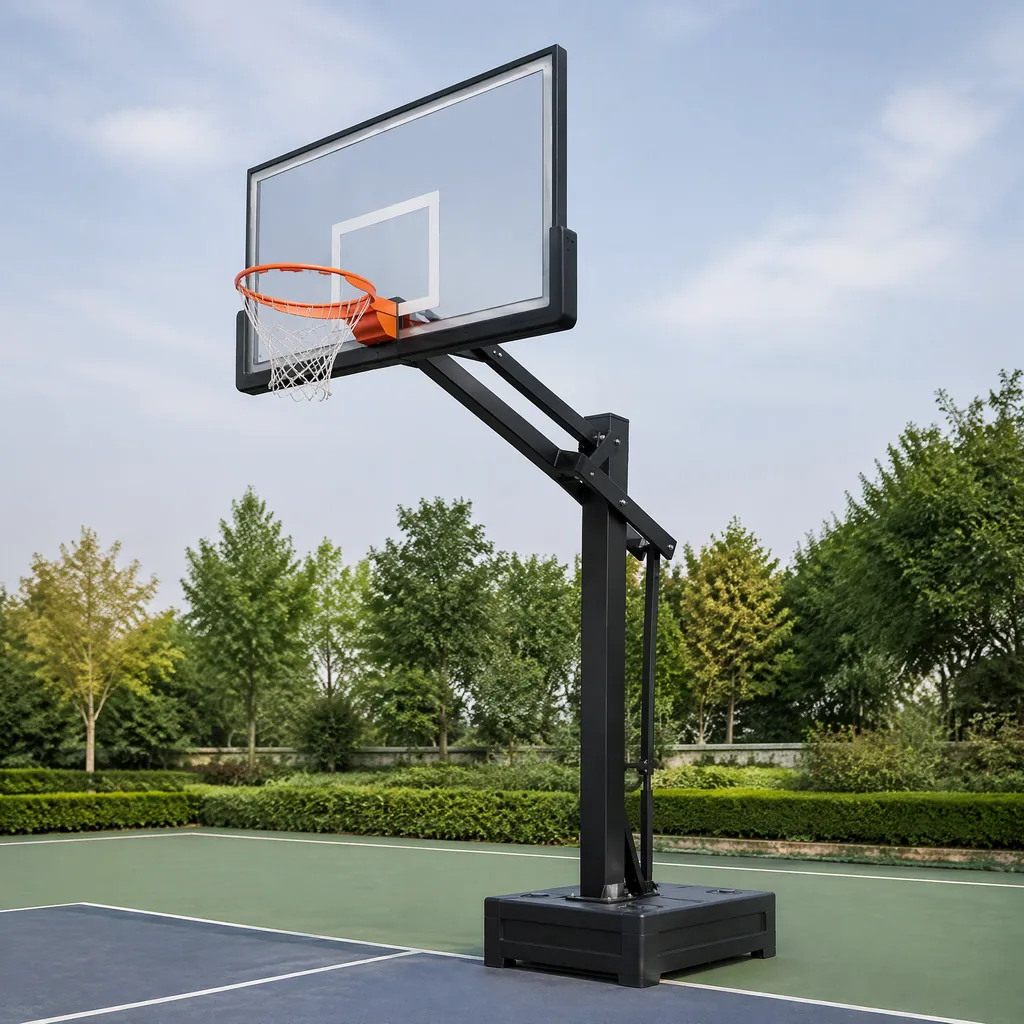
Outdoor Basketball Stand Finishes: A Sourcing Guide
Choosing outdoor basketball stand finishes is a sourcing decision, not simply a color selection. A stand installed on a school court, public recreation site, residential development, or coastal facility must tolerate rain, sunlight, handling, impact, cleaning, and transport. The right finish should match the exposure level, steel construction, installation plan, expected maintenance, and service life. Buyers should compare the complete coating system and verify production consistency instead of approving a surface from a catalog photograph alone.
For B2B orders, define the environment first. Record whether the stand will be installed inland or near salt air, whether it will face direct afternoon sun, how often it will be cleaned, and whether the base or anchor area can collect water. This information lets the supplier recommend suitable outdoor basketball stand finishes and document the inspection method before sampling.
Match the finish to the exposure environment
Outdoor exposure is not the same at every site. A covered court may have limited rain contact but still experience humidity and condensation. An open public court can face repeated wetting, dust, fertilizer, cleaning chemicals, and accidental contact with bicycles or equipment. Coastal locations add salt-laden moisture, while cold regions may create freeze-thaw cycles around anchors and joints.
Ask the factory to identify the intended protection layer, substrate preparation, film coverage, and repair method. The finish should cover the frame, support arms, base, brackets, and accessible weld areas with no unprotected edges that can become early corrosion points. Do not treat a general phrase such as “weather resistant” as a complete specification. The quotation should connect outdoor basketball stand finishes to the actual installation environment.
Compare common coating and protection systems
Powder coating is widely used for steel sports equipment because it can provide an even decorative surface with a range of colors and gloss levels. Its performance depends on cleaning, pretreatment, powder selection, curing, film thickness, and handling after curing. A well-finished frame should have consistent coverage, controlled color, and no pinholes, craters, runs, or obvious thin areas. When comparing outdoor basketball stand finishes, buyers should request the coating specification and test evidence for the intended climate.
Electrophoretic or other pretreatment systems may be used as an additional protection layer beneath a topcoat. Hot-dip galvanizing can be considered for components exposed to severe outdoor conditions, but the appearance, drainage design, dimensional effect, and compatibility with later painting require careful review. The best choice depends on the steel grade, component geometry, expected exposure, target appearance, and maintenance plan. Compare systems by documented construction rather than selecting only by finish name.
Inspect preparation, welds, and edge coverage
Surface preparation affects the service life of the finished stand. Before coating, inspect whether oil, rust, scale, welding residue, dust, and sharp projections have been removed. Weld zones deserve special attention because spatter, rough transitions, pinholes, or incomplete cleaning can create weak points beneath the finish. Edges, bolt holes, brackets, and narrow gaps should be reviewed from more than one angle. These checks help confirm that outdoor basketball stand finishes cover the areas most likely to start corrosion.
During sample approval, use consistent lighting to compare color and texture across the frame. Run a clean cloth over accessible surfaces to identify rough particles, exposed burrs, or contamination. Check that protective caps and padding do not conceal unfinished areas. A production sample should represent the same preparation and curing process planned for the bulk order, not a manually repaired showroom piece.
Consider UV, impact, and maintenance response
Sunlight can change color, gloss, and surface appearance over time. Dark colors may show fading or chalking more clearly, while textured finishes can hide minor marks but may be more difficult to clean. Buyers should state the required appearance and acceptable change rather than assuming every outdoor coating will age identically.
Impact resistance also matters around the base, support arm, backboard frame, and adjustment points. Ask how the supplier protects finished parts during assembly and loading. Review likely contact from balls, tools, carts, and maintenance equipment. Cleaning instructions should identify approved detergents, cloths, and repair materials. Aggressive chemicals or unapproved touch-up paint can create color differences and weaken the appearance of the complete stand.
Build a practical inspection plan
A sourcing inspection should combine appearance, construction, and packaging checks. Confirm the coating color, gloss or texture, coverage, adhesion expectation, weld condition, edge treatment, hardware compatibility, and visible corrosion. If the purchase order specifies a coating thickness, test method, or environmental requirement, record the equipment, location, sample number, and result.
- Compare the approved color, gloss, texture, and finish coverage under consistent lighting.
- Inspect welds, corners, holes, brackets, edges, and concealed areas for exposed steel or rough preparation.
- Check scratches, chips, pinholes, runs, craters, contamination, and uneven curing signs.
- Confirm that fasteners, padding, labels, and accessories do not damage the coating during assembly.
- Review carton protection, separators, wrapping, pallet stability, and moisture control before loading.
- Keep photographs and sample references with the inspection report and purchase order.
Control packaging, repairs, and supplier changes
Even strong outdoor basketball stand finishes can be damaged when steel frames rub against each other in transit. Use separators at contact points, protect corners and brackets, and confirm that the carton or pallet can resist movement during sea or road transport. Photograph representative packed units before loading so damage found on arrival can be separated from a production defect.
Require written approval before the factory changes powder supplier, pretreatment, color code, curing conditions, steel preparation, packaging, or repair paint. A small process change can affect adhesion, color matching, corrosion response, and repeat-order appearance. Maintain an approved physical sample, coating description, photographs, inspection record, and repair instruction for each product version.
Make the final sourcing decision
The most suitable outdoor basketball stand finishes balance exposure, appearance, durability, repairability, total cost, and supplier control. Compare the complete system against the installation site and expected service routine. Approve the finish only after the sample demonstrates consistent coverage, acceptable handling, and clear packaging protection. For repeat orders, use the same reference and require documented approval for any process or material change.
A disciplined finish specification helps buyers avoid vague coating claims and gives factories a measurable production target. When environment, preparation, coating, inspection, packaging, and change control are connected, the stand is more likely to arrive with the intended appearance and remain serviceable through daily outdoor use.