
 EN
EN
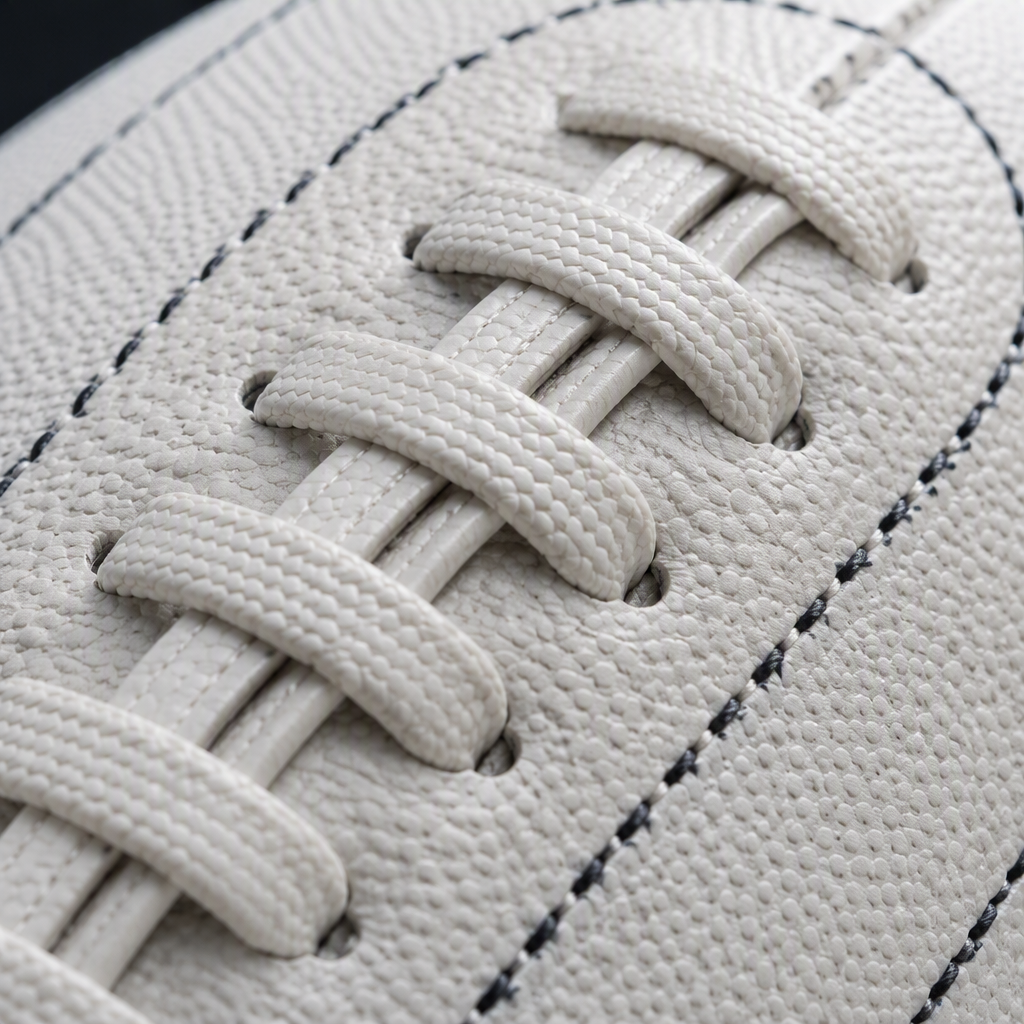
In the world of American football and rugby, the tactile connection between the player and the ball is paramount. For a quarterback or a fly-half, the grip, weight, and "lacing" of the ball define their accuracy. For B2B sourcing professionals, the challenge lies in choosing between Composite and Genuine Leather. Each material serves a specific market tier, and understanding their positioning is key to a successful product launch.
1. Genuine Leather: The Professional Elite
For top-tier professional leagues (like the NFL or International Rugby), genuine cowhide leather remains the undisputed king. It offers a unique organic texture that becomes better with use.
- Customized "Break-In" Period: Genuine leather balls require a break-in period where the natural oils and tanning treatments create a "tacky" grip specific to the player’s preference.
- Scent and Feel: The premium look and traditional scent of leather convey a sense of heritage and high-stakes competition.
- High Durability on Turf: On well-maintained grass fields, a genuine leather ball can last for seasons, maintaining its structural integrity.
2. Composite Materials: The Modern Versatile Alternative
High-performance composite materials have revolutionized the mid-tier and retail markets. These are engineered to provide an immediate "game-ready" feel without the need for a break-in period.
- Enhanced All-Weather Grip: Composites are often designed with aggressive "pebbled" textures that maintain friction even in heavy rain—a major advantage over leather, which can become heavy when wet.
- Consistency: Unlike natural leather, which can have slight variations in thickness, composite panels are 100% uniform, ensuring perfect balance across every ball produced.
- Cost-Effectiveness: For school programs and amateur clubs, composites offer 95% of the performance of leather at a fraction of the price.
3. The Art of the Lacing: Professional Precision
Whether leather or composite, the "laces" (stitching) are where the game is controlled. At MOZURU, we utilize high-tensile, textured laces that provide a tactile anchor for the fingers. This is critical for applying the spiral spin required for long-distance passing accuracy. Our manufacturing process ensures that the laces are perfectly aligned with the internal carcass, preventing any "wobble" in the ball’s flight path.
4. Market Positioning for B2B Buyers
When building your catalog, consider this tiered approach:
- Tier 1 (Professional): Genuine Leather, official size, customized with embossed brand logos.
- Tier 2 (Competitive Training): Premium Micro-Pebble Composite with moisture management.
- Tier 3 (Youth & Recreational): Standard Composite or high-grade Rubber for maximum durability on all surfaces.
Summary Suggestions
- For Elite Performance: Stick with Genuine Leather for official match-day balls.
- For Mass Retail: Prioritize high-performance Composites for their "out-of-the-box" playability.
- For Branding Projects: Use Composite materials, as they accept digital and silk-screen printing more consistently than natural leather.
FAQ
Q1: Does a leather ball get heavier in the rain?
Yes. Natural leather is porous and can absorb moisture. This is why professional leagues often swap balls during wet games. Composite balls are better for consistent weight in all weather.
Q2: What is the typical MOQ for custom leather rugby balls?
Because genuine leather involves specialized tanning and cutting, MOQs are generally higher than for composite balls. However, MOZURU offers **Flexible MOQ** solutions to support boutique brands and club orders.
Q3: Can we customize the pebble depth on composite balls?
Absolutely. We offer various molds with different "pebble" profiles—from fine textures for precision handling to aggressive patterns for maximum wet-weather grip.
Q4: How do you ensure the ball maintains its "prolate spheroid" shape?
We use a multi-layer lining system (polyester and cotton) reinforced with a high-performance bladder to ensure the ball retains its iconic shape through repeated impacts.
Contact Us
Ready to partner with a sports equipment manufacturer that prioritizes sustainability without compromising on performance? The MOZURU team at Wuxi Leeqian International Corporation Ltd is here to help. Whether you are a distributor, retailer, or sports organization, we offer customized OEM and ODM solutions tailored to your market needs.