
 EN
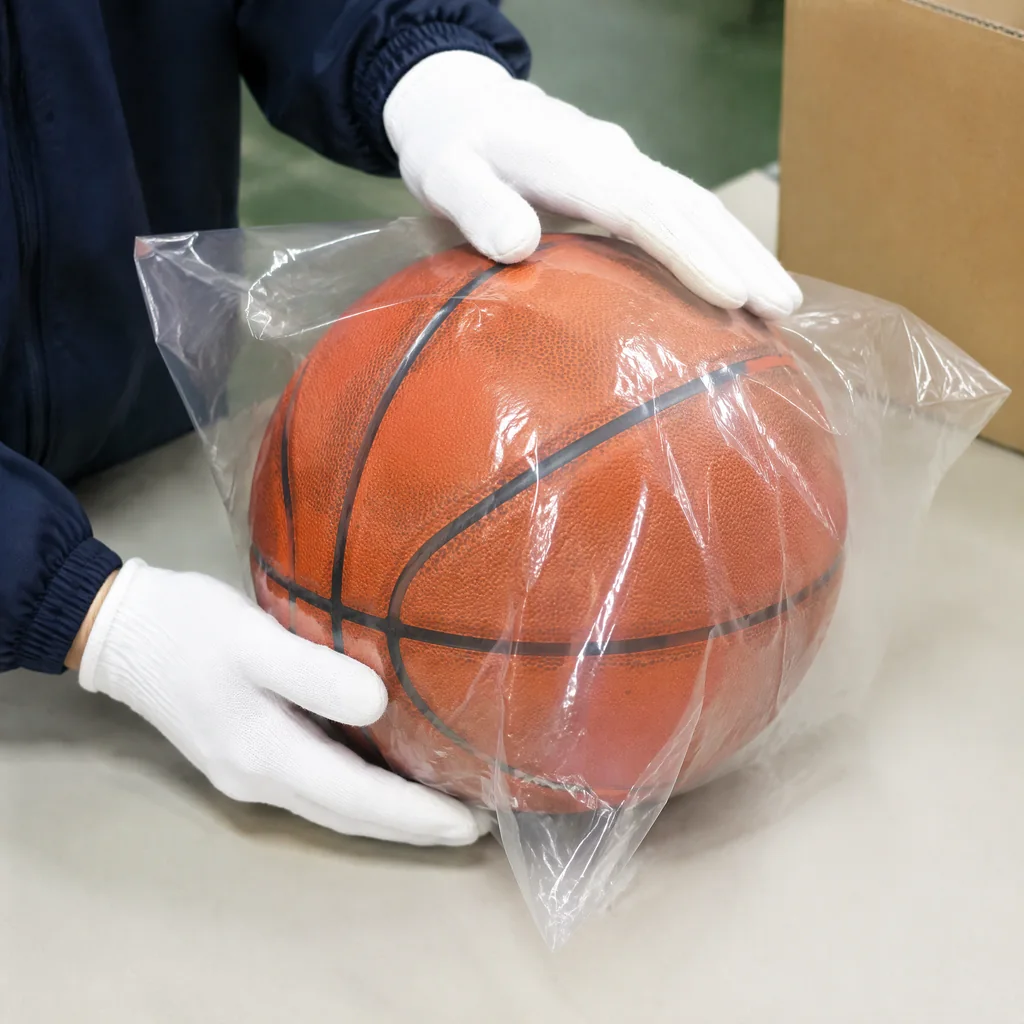
Export Basketball Packaging: Carton & Transit Guide
Export basketball packaging must protect a round, pressurized product while controlling freight volume and making cartons easy to count. Poor decisions can cause crushed boxes, scuffed covers, valve damage, or unexpected container costs. For a B2B buyer, the packaging specification should be approved with the basketball rather than added at the end of production. Carton design, inflation condition, and transit protection all influence whether a shipment arrives ready for distribution. For buyers, export basketball packaging is therefore a measurable part of the shipment specification. Use export basketball packaging checkpoints for carton fit, inflation, moisture, and loading.
Export Basketball Packaging: Shipment Planning
Begin with destination, transport mode, climate, handling frequency, pallet format, and storage period. A container moving directly to a warehouse may need a different master carton from a mixed LCL shipment that is handled at several terminals. Confirm whether balls are packed fully inflated, at reduced pressure, or deflated. This decision changes carton dimensions, internal movement, and the risk of cover deformation. A clear export basketball packaging brief keeps factory, forwarder, and receiving teams aligned. The export basketball packaging record should name the approved board, divider, and closure.
Consider the receiving operation as well. Retailers may need cartons that identify each color and model clearly, while schools may receive mixed cartons for quick allocation. Export basketball packaging should support barcode scanning, manual counting, and safe lifting without adding unnecessary components. This export basketball packaging plan should be agreed before the carton supplier starts tooling. Review export basketball packaging after any change to ball size, cover, or shipping pressure.
Export Basketball Packaging: Carton Engineering
Measure the actual finished ball, including its approved pressure and cover thickness. Use the measurement to set a carton size that holds the intended quantity without crushing or excessive free space. Free movement can create scuffing, while a tight fit transfers impact directly to the cover and seams. In export basketball packaging, the approved pressure and finished diameter should be recorded together. A repeatable export basketball packaging checklist supports faster buyer approval.
Specify board grade, flute, compression performance, closure, tape, and print. A master carton holding heavier inflated balls needs sufficient edge strength for stacking. If cartons are palletized, confirm the footprint and maximum stack height. Send a loaded sample to the buyer or perform a compression check before approving mass carton production. The carton decision is a core export basketball packaging control, not only a purchasing detail. Keep export basketball packaging evidence with photographs, test results, and shipping documents.
Inflation Planning in Export Basketball Packaging
Inflation is a product-control issue as well as a logistics issue. Full pressure may give the ball its correct shape but increase carton stress. Reduced pressure can lower stress but may allow panels to rub or deform. Write the exact shipping condition on the packing instruction and inspect it during final quality control. A validated export basketball packaging sample helps confirm fit before mass production.
Protect valves and decorated zones from direct contact with carton edges. Dividers, paper sleeves, or surface separators may be suitable, but they should be clean, dry, and compatible with the cover. Avoid sharp plastic that can mark the ball. If the product has a soft-touch finish, test the complete packing arrangement for pressure marks after storage. Document export basketball packaging requirements beside the final inflation and inspection instructions.
Moisture Risks in Export Basketball Packaging
Ocean freight exposes cartons to humidity and changing temperature. Keep cartons off wet floors and load only into a clean, dry container. A moisture barrier or desiccant can support the plan for a demanding route, but it cannot repair a leaking container or wet loading dock. Agree in writing whether these materials are included in export basketball packaging and record their placement. Good export basketball packaging also protects the valve and printed areas during repeated handling.
Check packaging after conditioning at high and low temperatures when the destination has a severe climate. Adhesive tape, printed labels, synthetic covers, and carton fibers can respond differently. A short test may reveal that a carton closes well in the factory but opens after condensation. Climate-ready export basketball packaging reduces exposure to moisture, condensation, and fiber softening.
Export Basketball Packaging Labels and Documents
Carton markings should include model, size, color, quantity, purchase order, carton number, gross and net weight, dimensions, origin information, and any required handling symbol. Place barcodes on a flat, readable surface away from seams and tape. Match carton data to the packing list, invoice, purchase order, and pallet count. Treat export basketball packaging materials as part of the route risk review for ocean freight.
Photograph the approved carton and the final loaded pallet pattern. If the order contains different models, use a carton map that allows a warehouse to locate each version quickly. Clear export basketball packaging reduces receiving time and limits disputes caused by unclear counts. Consistent export basketball packaging labels make warehouse receiving faster and more accurate.
Testing Export Basketball Packaging Before Shipment
Use an appropriate handling test: compression, drop, vibration, or a simulated pallet movement. Inspect both the carton and the basketballs after testing. Look for crushed corners, broken closures, pressure marks, surface scuffs, print damage, valve movement, and changes in roundness. Test with final labels and the intended loaded weight rather than with a blank box. A complete export basketball packaging document set prevents avoidable count and identification disputes.
During container loading, inspect the container floor and walls for water, odor, nails, or contamination. Stack cartons according to the approved plan, brace the final row, and record the container and seal numbers. Keep photographs of the loaded condition and carton count with the shipment file. A complete export basketball packaging test should use the actual loaded carton and final markings.
Repeat-Order Controls for Export Basketball Packaging
Retain the approved packaging drawing, board specification, unit arrangement, inflation instruction, and label file. If the ball changes cover, size, or pressure, review the carton instead of assuming the old design remains safe. A carton supplier change should also trigger a compression or fit check. Record export basketball packaging findings so repeat orders can use verified controls.
Conclusion: Export Basketball Packaging Checklist
Reliable export basketball packaging combines accurate carton engineering, a controlled inflation condition, protection for sensitive surfaces, moisture planning, and loading records. Approve the packaging with the finished ball and test it under realistic handling. This disciplined approach reduces transit damage, improves warehouse efficiency, and gives B2B buyers a dependable shipment standard for future orders. This export basketball packaging standard gives B2B buyers a repeatable basis for future orders.