
 EN
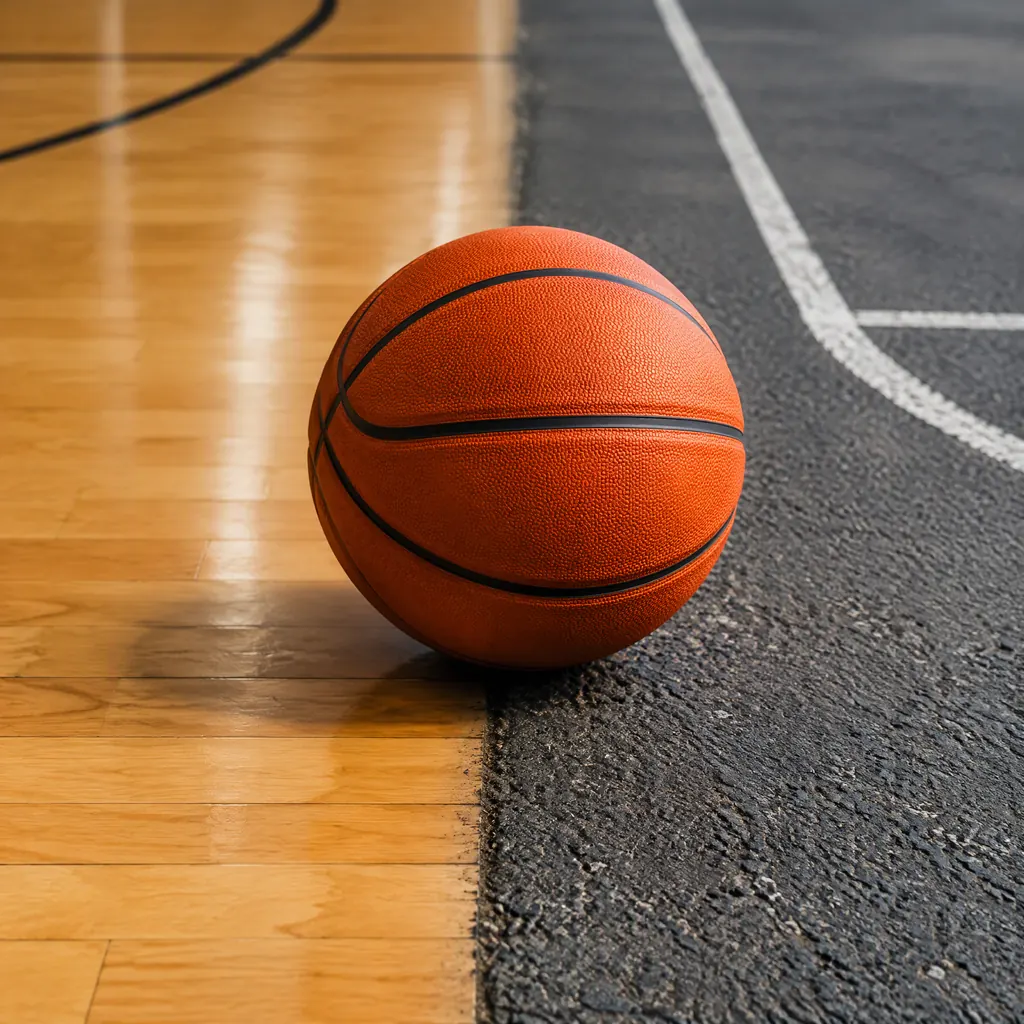
Indoor vs. Outdoor Basketballs: Material Guide
Indoor vs outdoor basketball selection starts with contact conditions. Indoor and outdoor basketballs may share a similar shape, but they are designed for different court environments. Court texture, dust, moisture, temperature, and cleaning routines all affect the cover and internal construction. For B2B buyers, selecting the right material is important for customer satisfaction, warranty exposure, and the credibility of the product range.
In an indoor vs outdoor basketball comparison, there is no single cover material that is best for every use. Indoor products commonly emphasize touch, grip, and a refined surface. Outdoor products need stronger resistance to abrasion and contamination. Some buyers need a practical hybrid ball for occasional use on both surfaces, but that choice should be made with clear expectations rather than a broad claim of universal performance.
Indoor basketball materials
In an indoor vs outdoor basketball review, indoor basketballs often use leather-like synthetic covers, composite materials, micro-fiber surfaces, or natural leather in specialized product lines. These covers can be formulated for a soft hand feel, controlled grip, and smooth interaction with a clean wood or sport-floor surface.
Composite and micro-fiber covers offer a broad range of design options. The manufacturer can adjust texture, coating, backing, and softness to create a product for training, club, or premium use. Natural leather can provide a distinctive break-in experience, but it may require more careful conditioning and may not be appropriate for every customer or distribution environment.
For indoor vs outdoor basketball sourcing, indoor buyers should inspect tactile response, surface uniformity, seam quality, roundness, bounce, and artwork. Also review the cover after repeated cleaning because gym maintenance products and perspiration can affect the finish.
Outdoor basketball materials
In an indoor vs outdoor basketball comparison, outdoor basketballs are commonly built with rubber or durable synthetic covers designed to tolerate rougher contact. Asphalt and concrete create more abrasion than a clean indoor floor, and outdoor balls may encounter dust, moisture, heat, and direct sunlight. A cover that feels excellent indoors may wear quickly outdoors if its surface is not designed for that exposure.
For an indoor vs outdoor basketball decision, rubber covers can provide practical durability and strong visibility for value-oriented or recreational programs. Their feel may be firmer or less refined than a premium indoor cover, but this trade-off can be appropriate when the main requirement is reliable use on demanding surfaces.
In an indoor vs outdoor basketball material guide, durable composite covers can serve outdoor or mixed-use products when the formulation and backing support the intended environment. Buyers should still validate scuff resistance, texture retention, cleaning, and color stability. Do not assume that a composite label automatically means outdoor suitability.
Surface texture and grip
In an indoor vs outdoor basketball comparison, texture helps a player control the ball, but the ideal texture differs by environment. Indoor products may use a more nuanced grain that emphasizes hand feel. Outdoor models may need a more pronounced, wear-tolerant pattern to maintain usable grip after contact with dust and rough surfaces.
Grip in an indoor vs outdoor basketball review changes with moisture, dirt, temperature, and use. Test samples with clean and lightly contaminated hands where that reflects real operation. For outdoor products, examine whether dust fills the texture and whether cleaning restores the intended feel. For indoor products, review how perspiration and regular wiping affect the finish.
Construction, bladder, and bounce
Indoor vs outdoor basketball material selection cannot be separated from construction. Panel geometry, bonding or stitching, lining, winding, bladder, and valve all contribute to roundness and bounce. A durable cover with poor internal balance will not deliver a dependable product.
Confirm the bladder material and inflation-retention specification. Check valve security and ease of inflation. Inflate samples using a consistent procedure and inspect them after settling. Measure roundness, weight, and circumference across multiple orientations, then assess bounce on a surface appropriate to the product’s intended use.
In indoor vs outdoor basketball sourcing, outdoor balls may be exposed to larger temperature changes, so review pressure behavior under the expected climate. Indoor balls also need stable inflation, particularly for organized training where consistent response is important.
Durability and environmental exposure
For indoor vs outdoor basketball procurement, outdoor products should be reviewed for abrasion, scuffing, dirt retention, moisture exposure, and ultraviolet aging when relevant. Test on the actual or a representative court surface. Inspect the cover, seams, valve, graphics, and surface texture after use. A single visual check immediately after production is not enough to predict field durability.
Indoor products may face less abrasion but can still suffer from surface polishing, coating wear, chemical exposure, and repeated cleaning. If the ball is supplied to schools or clubs, provide clear care guidance and confirm that the recommended cleaning process is practical for staff.
Indoor vs outdoor basketball storage and transport also matter. Heat, compression, and prolonged exposure to sunlight can affect covers and bladders before the ball reaches the customer. Packaging should protect the surface and avoid creating permanent marks or deformation.
Retail and institutional buyers should also consider how the material communicates use. A product sold for outdoor practice needs clear care instructions and packaging that does not imply delicate indoor-only handling. Likewise, an indoor premium ball should be protected from unnecessary rough-surface trials during demonstrations. Aligning the sales message with the material helps reduce misuse and returns.
Choosing a hybrid or multi-surface model
For buyers comparing indoor vs outdoor basketball use, a hybrid basketball can be useful for customers who alternate between indoor and outdoor courts. However, buyers should explain the compromise. A hybrid cover may provide acceptable performance across both settings without matching the specialized touch of an indoor product or the abrasion resistance of a dedicated outdoor model.
For an indoor vs outdoor basketball program, define the primary environment and the acceptable performance range. Test grip, bounce, surface wear, cleaning, and shape stability on both surfaces. Marketing should state the intended use clearly so customers do not expect a specialized result from a compromise design. Keep the indoor vs outdoor basketball message consistent.
When a product is sold through multiple channels, keep the material description consistent across the carton, online listing, sales sheet, and purchase documents. Explain whether the ball is indoor-focused, outdoor-focused, or multi-surface. Consistent terminology helps distributors set correct expectations and gives quality teams a clear reference when reviewing complaints.
B2B material and supplier checklist
- Identify the primary court surface, climate, customer type, and price tier.
- Confirm cover material, texture, coating, backing, bladder, valve, and construction.
- Request samples made with production-intent materials and artwork.
- Test grip, bounce, roundness, inflation retention, abrasion, and cleaning response.
- Review color and logo durability after relevant handling and exposure.
- Approve packaging, care instructions, inspection limits, and change-control rules.
Conclusion
Indoor vs outdoor basketball decisions should follow the surfaces and conditions the products will actually face. Indoor materials can prioritize touch and refined grip, while outdoor materials generally emphasize abrasion and environmental resistance. Hybrid products can cover a broader use case when their limitations are understood. For B2B procurement, the safest approach is to connect the material choice to a written use case, a physical sample, realistic testing, and a factory quality plan.