
 EN
Baseball Inspection Checklist for Bulk Buyers
A useful baseball inspection checklist helps bulk buyers decide whether a shipment is ready for release, needs correction, or should remain on hold. It should connect the approved sample with the actual lot and focus on the risks that matter: roundness, weight, core response, cover, seams, artwork, packaging, and consistency between cartons. The purpose is not to inspect every ball in the same way. It is to use a representative method that identifies problems before they become customer claims.
Before inspection begins, define the intended use, product grade, quantity, colorways, packaging plan, and approved reference. Training balls, game products, youth items, pitching-machine balls, and promotional products may need different acceptance priorities. A clear baseball inspection checklist gives purchasing, quality staff, factories, and distributors the same basis for a release decision.
Set the reference and sample plan
Start by gathering the approved physical ball, product specification, artwork, purchase order, carton plan, and any agreed test method. Record the ball's intended size, weight, cover, seams, core construction, compression expectation, and packaging. The baseball inspection checklist should list multiple colorways or production periods separately. Do not compare a production sample with an old photograph when an approved physical reference is available.
Choose samples from different cartons and, when possible, from different points in the production lot. Avoid taking every sample from the easiest carton to reach. Note the carton number, sample code, colorway, and inspection time. The baseball inspection checklist sampling method should be consistent across future orders, but buyers should also increase attention when previous lots showed defects or when the product has a higher commercial risk.
Check roundness, size, and weight
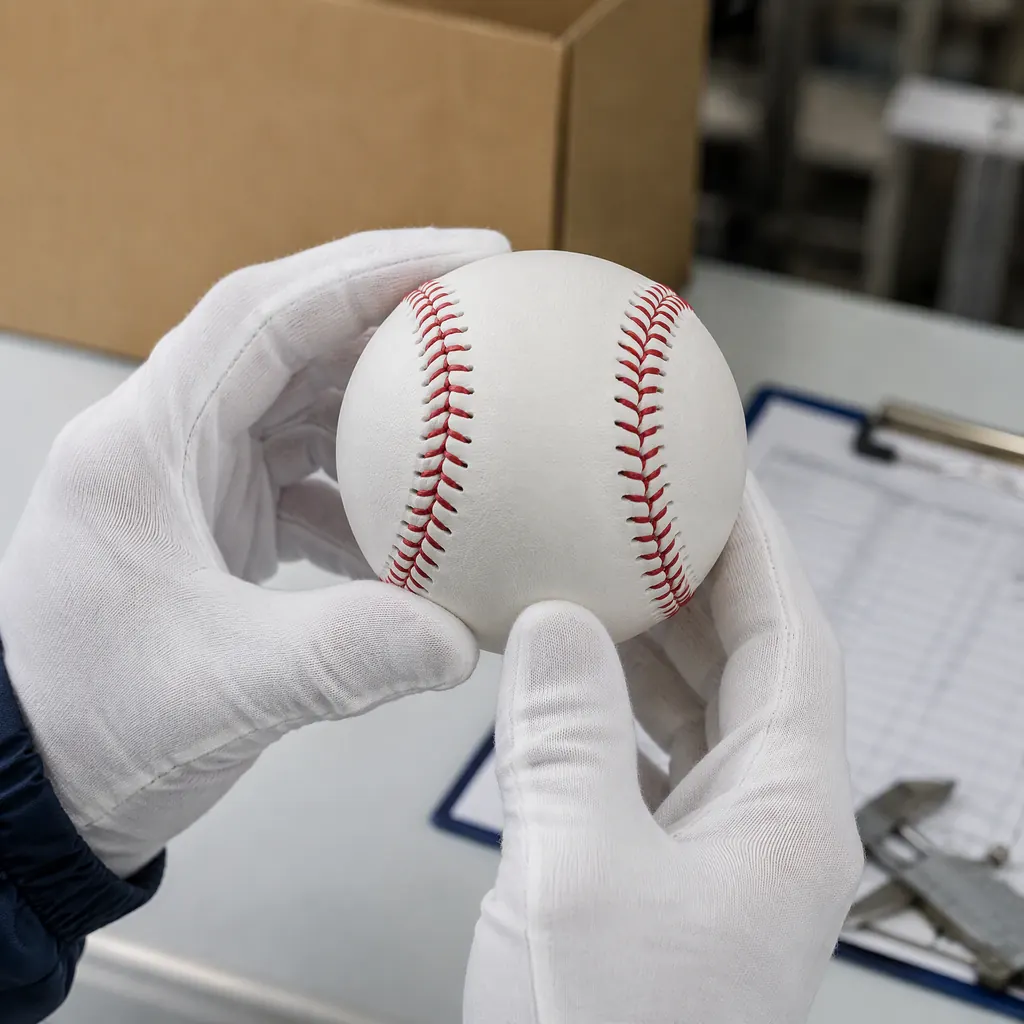
Roundness is the first physical check because shape affects handling, storage, and customer perception. Rotate each baseball inspection checklist sample and look for flat areas, bulges, soft spots, cover wrinkles, or visible distortion around the seams. Place samples on a level surface and compare how they rest. Measure the agreed dimensions and weight using the same tools and method used for the approved sample.
A good baseball inspection checklist should record the test condition, equipment, sample code, and result rather than only stating pass or fail. Temperature, storage, and handling can influence measurements. If one ball is outside the agreed range, compare additional samples from the same carton and neighboring cartons. A repeated pattern suggests a lot or process issue, while an isolated result may require a targeted recheck. Keep the baseball inspection checklist measurement record with the release report.
Inspect cover, seams, and surface
Review the cover for correct material, color, texture, contamination, scuffing, wrinkles, scratches, peeling, or uneven finishing. Follow the seams around the ball and check stitch spacing, thread tension, seam height, panel alignment, loose ends, open holes, and areas where the seam meets artwork. The surface should match the approved sample in both appearance and intended hand feel.
Use several viewing angles and consistent lighting. Compare the center of each panel with the areas close to the seams. On a custom ball, verify logo position, color registration, print clarity, and resistance to light handling. A baseball inspection checklist visual defect and a structural defect should be recorded separately. The cover may look attractive while a loose thread or open seam creates a more serious durability risk.
Evaluate core response and handling
The internal core, winding, cover, and seams work together to create the ball's response. Buyers should not approve core performance from a label alone. Compare samples through controlled catching, throwing, fielding, batting practice, or soft-toss actions that match the intended use. Check whether the ball feels consistent, rebounds as expected, and remains stable after repeated contact.
For pitching-machine products, use the specified machine or a documented equivalent and record the setting. Inspect the ball before and after the test for marks, deformation, seam damage, or changes in response. For youth or training products, focus on manageable handling and repeatability. The same baseball inspection checklist can cover different products, but the handling test should be matched to the product brief and recorded in the baseball inspection checklist report.
Verify valve, air, and storage response where relevant
Some baseball products or training variants include construction details that require a separate air or storage check. If the product specification includes a valve, confirm smooth use, secure bonding, and an undamaged surrounding area. For any air-retention or compression observation, record the starting condition, storage position, observation period, and test method. Do not convert one informal observation into a universal performance promise.
Storage can reveal issues that are not visible at first inspection. Check whether cartons protect the balls from compression, moisture, heat, dirt, and friction. After storage, compare shape, cover, seams, and handling with the original reference. Record changes with sample codes so the factory can investigate the material, core, winding, packaging, or warehouse condition responsible.
Classify defects by release risk
A bulk buyer needs a decision framework, not just a long list of observations. A critical defect may affect structural integrity, safe use, severe deformation, or a required function. A major defect may affect shape, cover, seams, artwork, handling, or durability enough to create complaints. A minor defect may be cosmetic and suitable for a documented concession if the buyer accepts it.
For each defect, record the type, location, sample code, carton, affected quantity, photograph, corrective action, and recheck requirement. Do not hide a repeated issue by presenting only an average result. A shipment with acceptable color may still require a hold if several balls show loose seams or unstable shape. Risk classification makes the baseball inspection checklist useful in a release meeting.
Review packaging and bulk delivery
Packaging is part of the product's delivered condition. Confirm ball quantity per carton, inner protection, carton strength, labels, accessories, care information, pallet arrangement, and loading condition. Look for crushed corners, moisture exposure, loose inserts, compression marks, or cartons that do not match the packing list. Photograph representative cartons and connect them to the shipment record.
If artwork, carton markings, inserts, or packing materials differ from the approved plan, request a decision before loading. A packaging change may affect storage, branding, or customer presentation even when the baseball itself is acceptable. Include packaging findings in the baseball inspection checklist.
Use the bulk buyer checklist
The final checklist should be short enough to use at the factory and detailed enough to support a release recommendation. It should identify the order, sample range, inspection date, test conditions, findings, photographs, supplier response, and final decision.
- Confirm the approved ball, specification, artwork, packaging plan, and sample selection.
- Measure roundness, size, weight, and any agreed compression or response condition.
- Inspect cover, surface, seams, thread, artwork, color, panel alignment, and visible damage.
- Compare catching, throwing, fielding, batting, rebound, or machine use with the intended product.
- Check valve or air details where relevant and record storage or compression observations.
- Review cartons, quantity, labels, protective packing, moisture protection, and loading.
- Classify critical, major, and minor defects and decide release, concession, correction, or hold.
- Keep the approved sample, inspection report, photographs, and corrective action with the order.
Control repeat orders
Save the completed baseball inspection checklist with the approved sample, purchase order, artwork, and supplier version. Require written approval before changing the core, winding, cover, seams, thread, artwork process, carton, or packing method. A change that appears small to the factory may change the ball's weight, feel, shape, durability, or presentation. Use the same baseball inspection checklist for the next lot unless the product brief changes.
For a repeat shipment, compare the new sample with the previous reference using the same inspection method. Record what stayed the same, what changed, what defects were found, and what correction was accepted. This history helps purchasing negotiate from evidence and helps the factory correct recurring problems without restarting the entire evaluation.
Conclusion
A strong baseball inspection checklist turns bulk buying into a documented release process. Check shape, weight, cover, seams, core response, handling, packaging, and repeat-order changes against an approved reference. Classify defects by risk and connect each finding to a sample and corrective action. For B2B buyers, this approach reduces avoidable claims, improves supplier communication, and gives the shipment a clear evidence-based release decision.