
 EN
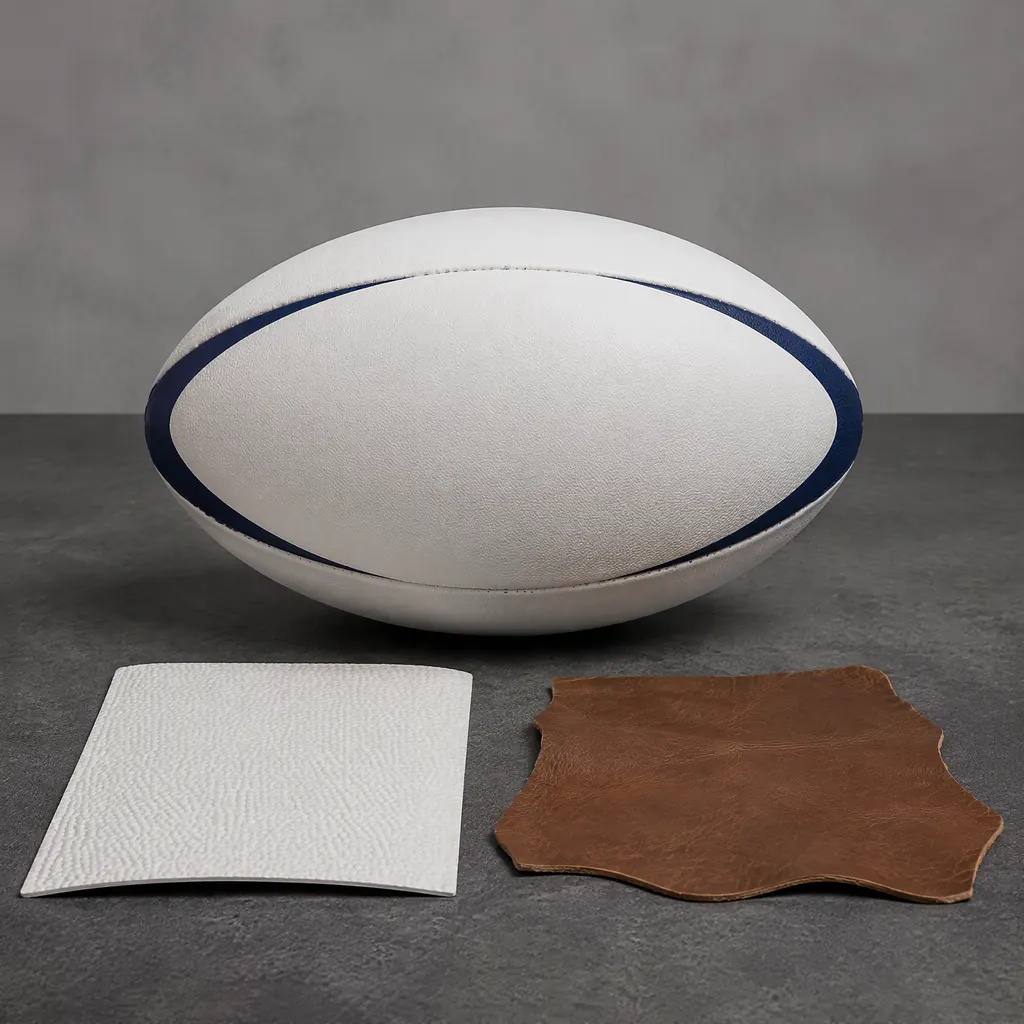
Rugby Ball Materials: Comparing Composite and Leather
Choosing the right rugby ball materials depends on how the ball will be used, maintained, positioned, and purchased. Composite covers can offer practical consistency, weather tolerance, and flexible product positioning, while leather covers may provide a traditional hand feel and a distinctive appearance. For B2B buyers, the important question is not which material is universally best. It is which rugby ball materials match the playing environment, grip expectation, cleaning routine, durability target, and commercial specification.
A proper comparison should include more than the visible cover. Backing, lining, bladder, valve, panel construction, surface treatment, inflation, and finishing all influence the final product. Two rugby balls described with the same material name can feel different if their construction or finishing process changes. Buyers should therefore compare physical samples and record the complete rugby ball materials specification before confirming a bulk order.
What rugby ball materials include
Rugby ball materials normally refer to the outer cover, but the cover works with several internal components. The outer surface affects grip, touch, appearance, and resistance to handling. The backing and lining support the cover and influence firmness. The bladder holds air and affects shape retention, while the valve supports inflation and maintenance. Panel geometry, seams, bonding, and texture determine how the material behaves across the oval surface.
During sourcing, ask the supplier to identify the cover type, backing arrangement, surface treatment, construction method, bladder, valve, and inflation reference used in the approved sample. This information makes rugby ball materials easier to compare between suppliers. It also helps prevent an unapproved substitution that changes the hand feel or appearance while the product description remains unchanged.
Composite rugby ball materials
Composite covers are commonly considered for training, club, school, promotional, and general-use rugby products. They can provide a controlled base for texture, color, artwork, and surface finishing. Depending on the formulation and coating, composite rugby ball materials may be developed for a softer touch, a more structured response, or improved resistance to routine handling. The exact result depends on the complete construction rather than the word composite alone.
Composite rugby ball materials can also support flexible B2B positioning. A buyer may request a cost-conscious training model, a durable school model, or a more refined club product using different cover structures and finishes. When reviewing samples, check grip in dry and damp conditions, texture consistency across panels, surface marking after handling, and the ease of cleaning. Ask the supplier to keep the same material version and finishing process during bulk production.
Leather rugby ball materials
Leather covers are often selected for their traditional appearance, tactile character, and premium product story. Natural or leather-based rugby ball materials may develop a distinctive feel as they are handled, but they also require a clearer maintenance and storage discussion. Moisture, cleaning products, drying conditions, and repeated use can affect the surface. Buyers should define how the product will be cared for before presenting leather as the preferred option.
Leather rugby ball materials should be evaluated for surface consistency, panel quality, edge finishing, color variation, and response after handling. A natural-looking surface may show variation that is acceptable for one product position but unsuitable for a highly uniform promotional order. Inspect the cover under consistent lighting and compare several samples rather than approving only the most attractive unit. Confirm the packaging and care instructions needed to protect the material during storage and transport.
Grip, wet-weather use, and maintenance
Grip is a central reason buyers compare rugby ball materials. Surface texture, coating, panel geometry, moisture, hand condition, and inflation all affect handling. A textured composite cover may provide a clear tactile response, while a smoother leather cover may feel different when dry. Neither observation should be generalized to every formulation. Test the actual samples with passing, catching, carrying, and controlled kicking movements.
Wet-weather use requires a practical review. Light moisture can change friction and make seams or textured areas feel different. Check whether the surface remains manageable, whether water collects in texture, and whether cleaning restores the intended feel after use. For B2B programs, record the handling method, moisture condition, cleaning routine, and storage process. This creates a more useful rugby ball materials comparison than a general claim about weather performance.
Durability and product positioning
Durability should be matched with the product's intended environment. Training rugby balls may be exposed to frequent handling, ball carts, repeated passing, outdoor storage, and regular cleaning. Club or premium products may prioritize touch and visual finish alongside durability. Promotional products may need stable artwork and packaging more than specialized wet-weather performance. Buyers should define the main use before asking a supplier to optimize rugby ball materials.
Inspect the cover for scuffing, peeling, wrinkles, panel lifting, color transfer, and surface changes after representative use. Review seam or bonding stability and check whether the ball keeps its shape after inflation and handling. Avoid unsupported service-life promises. Instead, ask the supplier which internal tests or sample checks support the proposed positioning and whether those checks match the buyer's actual court or field conditions.
Cost, maintenance, and sourcing decisions
The purchase cost of rugby ball materials should be considered with cleaning, storage, replacement, packaging, and repeat-order requirements. A lower-cost composite option may be suitable for high-volume training, while a higher-value leather option may support a premium range. Cost comparisons are only useful when the specifications are held constant. A quotation that changes the cover, bladder, texture, or packaging is not a direct material comparison.
Ask suppliers for a written specification, sample approval process, change-control method, and packaging plan. Confirm whether the same rugby ball materials can be reproduced in later orders and whether the supplier can maintain the approved color, texture, panel layout, and inflation reference. This is especially important for clubs, schools, distributors, and private-label programs that need consistent replacement stock.
Sample approval and repeat-order control
Before approving rugby ball materials, compare the approved sample with production samples under the same inflation, light, handling, and cleaning conditions. Record the rugby ball materials cover, rugby ball materials texture, rugby ball materials backing, rugby ball materials bladder, rugby ball materials valve, and rugby ball materials construction method. The rugby ball materials approval record should also note the rugby ball materials grip in dry conditions and the rugby ball materials grip after light moisture. Keep the rugby ball materials artwork, rugby ball materials packaging, rugby ball materials care notes, and rugby ball materials change-control requirements with the order. This gives the buyer a practical rugby ball materials reference for bulk production and repeat purchasing.
Buyer checklist for rugby ball materials
Before approving an order, use a checklist that connects the material choice to actual use. Keep the approved sample, inspection notes, artwork, and packing instructions with the purchase order. The checklist should cover both product performance and supply-chain control.
- Define the field environment, player group, use frequency, weather exposure, and maintenance routine.
- Record the cover, backing, lining, bladder, valve, texture, construction method, and inflation condition.
- Compare rugby ball materials for dry grip, damp handling, cleaning response, and surface consistency.
- Inspect roundness, panel alignment, seams, bonding, wrinkles, scuffing, color, and artwork.
- Review packaging, care instructions, carton protection, labeling, and storage requirements.
- Require written approval before changing rugby ball materials, coatings, adhesives, bladders, or processes.
- Retain the approved rugby ball materials sample for repeat orders and corrective-action reviews.
Conclusion
Composite and leather are both viable rugby ball materials when the cover, construction, finishing, and use environment are properly matched. Composite options may support flexible positioning, repeatability, and practical maintenance, while leather options may support a traditional feel and premium presentation. For B2B buyers, the safest approach is to compare physical samples, test dry and damp handling, document maintenance expectations, and control every material change before bulk production. A complete rugby ball materials specification makes quality, cost, and repeat-order decisions easier to manage.